FIRST LEGO League | Team #46300 | UNEARTHED
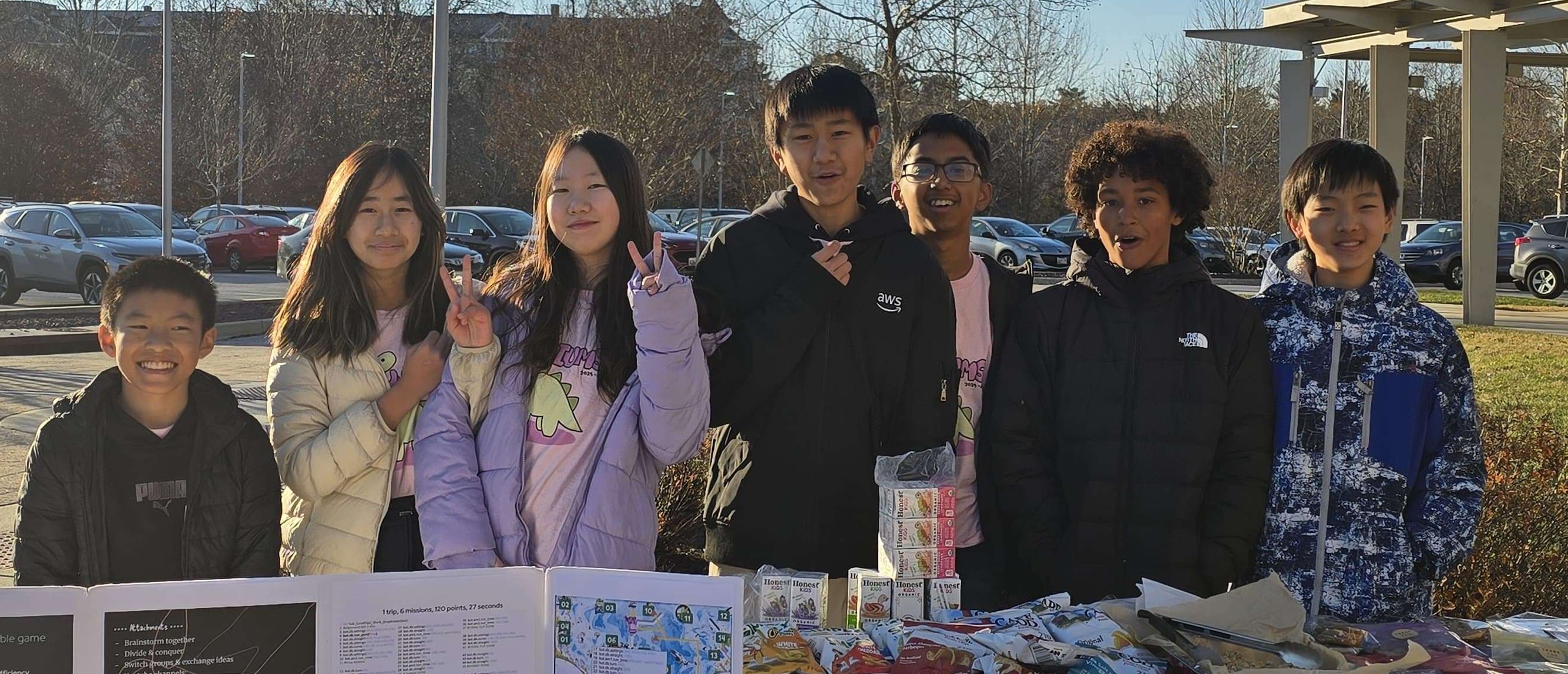
Our team, Alluviums, is a group of enthusiastic middle-schoolers that are competing in the FIRST LEGO League Challenge this year. Fun fact: We LOVE banana pudding!! For most of us, it is our rookie year in FLL, with only one of our members having previous experience (3rd year participant).
This year, we faced many struggles and had many triumphs, but one thing we all learned is that to achieve something great, we must all work together and persevere. Without this mindset, we would not have been able to achieve the level that our team is at today.
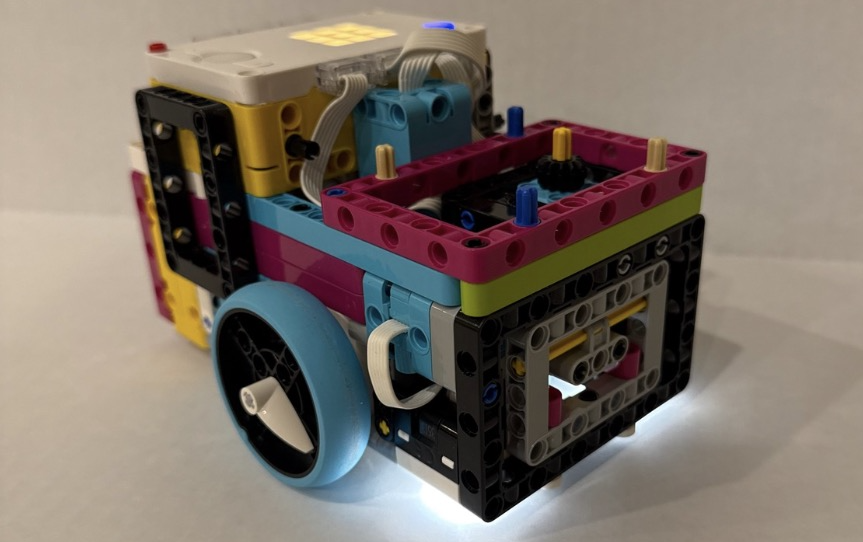
In our robot game and bot design, we first made adjustments to a bot that we had received in a starting kit from FLL. We made it easier to connect attachments and conserve power. Then, we analyzed each mission on the map and built attachments that could solve the missions efficiently, problem solving and rebuilding them over and over again, each time making it more efficient and able to complete more tasks at once.
The strategy we followed to compete the table game was to utilize two philosophies: APODS, which stands for Attachments, Proximity, Obstacles, Dependency, and Score Density, and ICIT, which stands for Identify, Communicate, Iterate, and Test. Using these two, we were able to efficiently and quickly diagnose problems, improve the code or attachments, and overall make our table game run a lot faster and versatile.
Our Innovation Project has had many bumps in the road to our final product. At the start, we decided that we were going to research the topic of Ancient DNA (ADNA), but after researching it further, we realized there was no problem to solve. It was a redundant topic that could have the potential to help archaeologists but it was not a feasible topic for our team. After discussing it further, we settled on a final topic we all liked: What problems archaeologists face while excavating underwater, and how we can help mitigate and solve these problems.
Our solution that we came up with is called SEALIS, formally known as the Submersible Exploration Archaeological Lens Imaging System, which is a pod style submarine that we designed to help archaeologists navigate dangerous underwater terrain. It’s equipped with a rotating camera that can be controlled to see in a certain direction, which is controlled by the pilot of the pod. It has three headlights that allow the pod to see clearly in low-light situations, as well as three propellers that allow the pod to move. Finally, it has 2 robotic arms that allow the pod to grab and take artifacts or other objects out of its place, helping archaeologists safely retrieve an artifact.
To make sure our pod was not just a thought and more of an established idea, some members designed a web app that would simulate how the controls of the pod would be. We also talked to professionals about our solution, namely being an archaeologist named Larry Lawson. He helped us improve our bot a great deal, giving us improvements and reasoning behind them. For example, he told us that from his personal experience, having an oxygen sensor on our pod would help archaeologists a lot, since oxygen levels usually dictate the state of the artifacts. So if we had an oxygen sensor, we could tell archaeologists how good or bad the condition of the artifact is, even without disturbing or bringing it to the surface.
We are an energetic and fun-loving team of 7 members: Aiyan, Bowen, Ian, Iris, Isabelle, Matthew, and Nathan. Despite the challenges, ups, and downs, we all enjoyed our season of First Lego League immensely. Throughout this season, we not only learned useful skills, like coding in Python, but we also learned many lessons, like that doing things as a team is easier than doing it alone. We are excited to continue our adventure as a team, and want to see where our FLL journey takes us.
This FLL season, we showed core values every day. We practiced the core value of Discovery (“disco-very”, as we called it) when we took our field trip to the Anne Arundel County Archaeology Lab and discovered fascinating information that became the base of our Innovation Project. We practiced Teamwork and Inclusion when we worked together to solve challenging problems, like a bug in our code. We also practiced them by making sure that everyone stayed on task by pairing up members and making sure everyone was heard. We practiced Innovation when we brainstormed new ways and ideas to solve a problem. We also practiced impact with our fundraiser for the Anne Arundel County Archaeology Lab at Miller Branch Library, spreading information and telling people about First Lego League, the Anne Arundel County Archaeology Lab, why we were fundraising, and so much more. Lastly, we practiced the core value of Fun in so many ways, including our Halloween Costume party, cracking jokes during breaks, and during team bonding activities, such as outside tag, or soccer.
Youtube: https://www.youtube.com/@fll.alluviums
Instagram: https://www.instagram.com/fll.alluviums
Email: fll.alluviums@gmail.com